
Every successful product starts with a good design, but a good design is only valuable if it can be manufactured efficiently. Many parts that look perfect on a CAD model become expensive to produce because of unnecessary complexity, difficult machining operations, or unrealistic tolerances. This is where Design for Machining (DFM) makes a real difference.
At HanaV, we believe that thoughtful design and precision manufacturing go hand in hand. By applying DFM principles early in product development, manufacturers can reduce production costs, shorten lead times, and improve part quality without compromising performance.
What Is Design for Machining (DFM)?
Design for Machining (DFM) is the practice of creating parts that are easier, faster, and more economical to machine. Instead of focusing only on how a component functions, DFM also considers how it will be manufactured.
A design that follows DFM principles typically requires fewer machining operations, less material waste, and shorter production times. The result is a component that performs well while costing less to produce.
Whether manufacturing a prototype or a high-volume production run, DFM helps avoid costly redesigns and production delays.
Why DFM Matters
Small design decisions can have a significant impact on manufacturing costs. Features that seem minor—such as deep pockets, sharp internal corners, or unnecessarily tight tolerances—may require specialized tooling or additional machining time.
Applying DFM principles offers several advantages:
- Lower manufacturing costs
- Faster production
- Improved machining efficiency
- Better dimensional consistency
- Reduced material waste
- Easier quality inspection
- Fewer production errors
- Shorter product development cycles
By designing with manufacturing in mind, companies can improve both product quality and profitability.
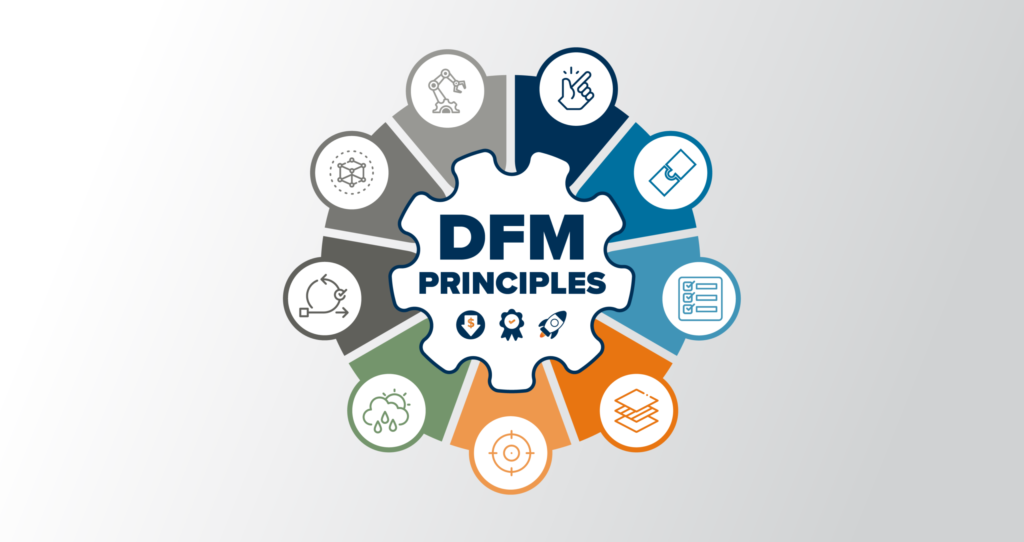
12 DFM Rules That Help Reduce Manufacturing Cost
1. Keep the Design Simple
Simple parts are generally easier and faster to machine. Avoid unnecessary features unless they provide a clear functional benefit. Reducing complexity often lowers machining time and tooling requirements.
2. Use Standard Material Sizes
Whenever possible, design components using commonly available stock sizes. Standard materials reduce procurement costs and minimize excess machining.
3. Avoid Unnecessarily Tight Tolerances
Not every feature requires extreme precision. Tight tolerances increase machining time, inspection requirements, and manufacturing costs. Apply close tolerances only where they are functionally necessary.
4. Design Accessible Features
Features should be easy for cutting tools to reach. Deep, narrow pockets or hidden internal areas often require specialized tools and longer machining cycles.
5. Minimize Deep Cavities
Deep cavities increase tool deflection and machining time. Keeping pocket depths practical improves cutting performance and helps maintain accuracy.
6. Use Standard Hole Sizes
Standard drill sizes simplify production and eliminate unnecessary custom tooling. This speeds up machining while reducing overall costs.
7. Add Internal Corner Radii
Perfectly sharp internal corners are difficult to machine. Including appropriate corner radii allows standard cutting tools to work efficiently and improves tool life.
8. Maintain Uniform Wall Thickness
Consistent wall thickness helps reduce vibration during machining and minimizes the risk of distortion, especially in aluminum and thin metal components.
9. Reduce Multiple Setups
Whenever possible, design parts that can be machined in fewer setups. Each additional setup increases production time and introduces opportunities for alignment errors.
10. Consider Tool Availability
Designing around standard cutting tools reduces manufacturing complexity. Custom tooling may solve a design challenge but often increases both cost and lead time.
11. Choose the Right Material
Different materials machine differently. Selecting a material that balances strength, durability, and machinability can significantly improve manufacturing efficiency.
12. Involve Your Manufacturing Partner Early
One of the most effective DFM practices is collaborating with your machining partner during the design stage. Experienced manufacturers can identify cost-saving opportunities before production begins, preventing expensive design changes later.
Common Design Mistakes That Increase Manufacturing Costs
Many production challenges originate during the design phase rather than on the shop floor.
Some common mistakes include:
- Overly complex geometries
- Excessively deep pockets
- Very thin walls
- Sharp internal corners
- Unnecessary surface finish requirements
- Tight tolerances on non-critical features
- Difficult-to-access machining areas
- Ignoring standard tooling dimensions
Recognizing these issues early can save both time and money throughout the manufacturing process.
How HanaV Supports DFM
At HanaV, manufacturing begins long before the first machine starts cutting material. Our engineering team works closely with customers to review part designs and identify practical improvements that simplify machining while maintaining product performance.
Our DFM approach includes:
- Design review before production
- Material selection guidance
- CNC machining optimization
- Tolerance evaluation
- Manufacturing feasibility analysis
- Process planning for improved efficiency
- Consistent quality control
By combining engineering expertise with advanced machining capabilities, we help customers reduce production costs while achieving reliable, high-quality results.
Benefits of Applying DFM Early
Incorporating DFM during the initial design phase creates long-term advantages throughout the product lifecycle.
These include:
- Lower machining costs
- Faster production schedules
- Reduced material waste
- Improved product consistency
- Simplified assembly
- Better overall manufacturability
- Fewer engineering revisions
- Higher production efficiency
The earlier DFM is considered, the greater the opportunity to improve manufacturing outcomes.
Why Choose HanaV?
At HanaV, we understand that successful manufacturing depends on more than advanced machines. It begins with smart engineering decisions that make production efficient and cost-effective.
Our team combines technical expertise with modern CNC machining technology to manufacture precision components that meet exact customer requirements. From prototypes to high-volume production, we focus on delivering consistent quality, practical manufacturing solutions, and dependable service.
Conclusion
Design for Machining (DFM) is more than a manufacturing guideline—it’s a strategic approach that helps reduce costs, improve quality, and accelerate production. By following proven DFM principles, businesses can avoid unnecessary machining challenges while creating components that are easier and more economical to manufacture.
At HanaV, we partner with customers from the earliest stages of product development, providing practical DFM guidance alongside precision machining expertise. Whether you’re developing a new product or refining an existing design, our goal is to help you achieve efficient manufacturing, reliable quality, and long-term value.
Contact +91 9148785173 or visit www.hanav.in or mail sales@hanav.in HanaV now for a quote or to speak with a CNC machining expert. We’re ready to bring your custom part designs to life with unmatched precision and speed.